

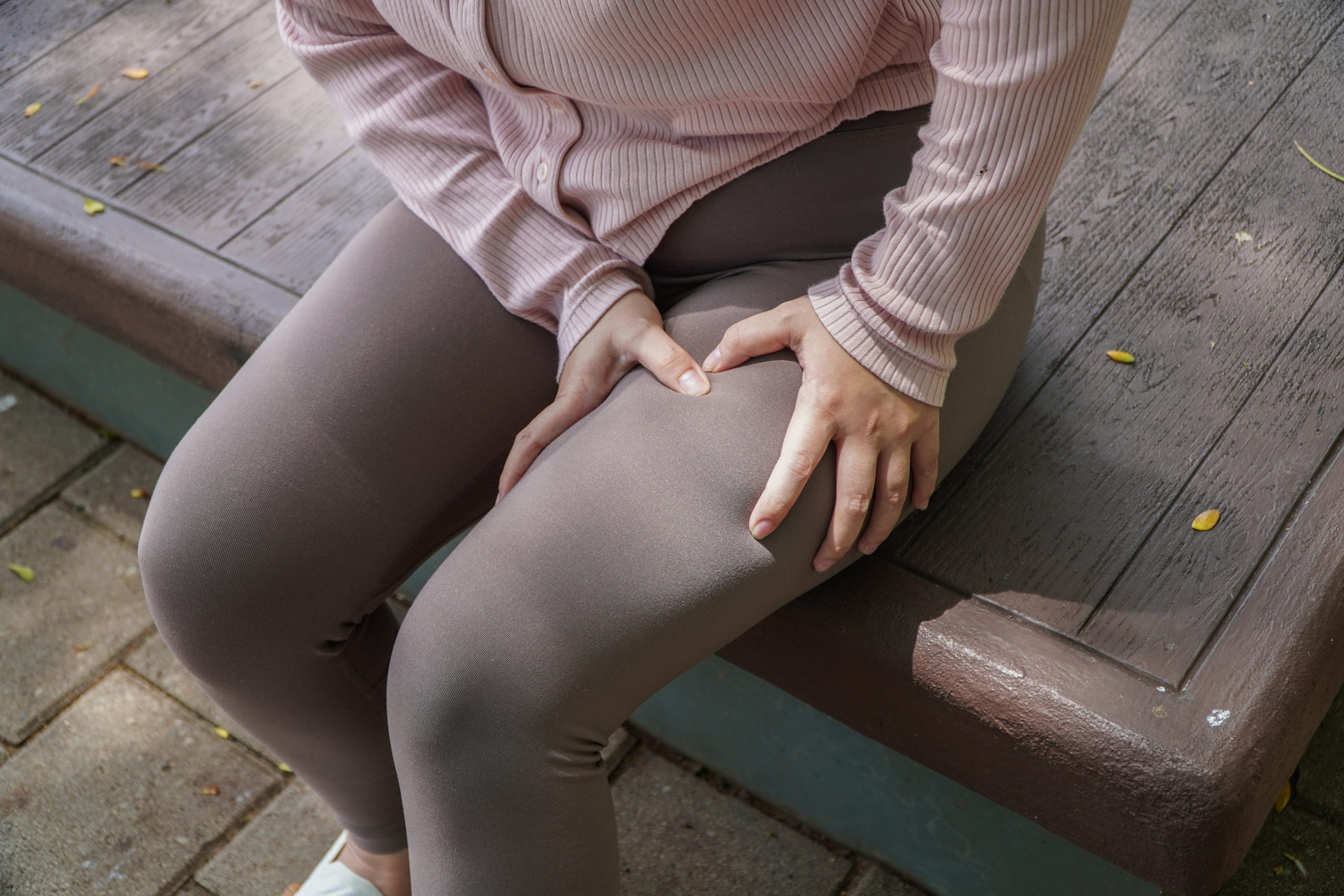
After a long hike or a tough gym session, it’s easy to blame painful thighs on the strain from that pumped-up exercise session.
But sometimes, the real cause lies elsewhere. The hip joint or nearby nerves can send pain signals that feel like they’re coming from the thigh. Even experienced athletes can miss these hidden sources of discomfort. Rest or stretching might not fix it, leaving you frustrated and unsure what’s really going on. Getting to the root of thigh pain often takes a closer look, and every body tells a different story.
In many cases, thigh pain doesn’t actually start in the thigh. Doctors often trace it back to the hip, even when the pain feels like it’s along the front or side of the leg. The hip joint bears a lot of load every day, and problems such as femoroacetabular impingement (FAI), a torn labrum, or early arthritis can all trigger pain that radiates downward. Because of that, stretching the quads may do little to help.
A common clue is something called the “C-sign.” When asked where it hurts, people often cup their hand in a C-shape over the side of the hip — thumb pointing backward, fingers toward the groin. That gesture signals pain that’s deep and broad, not just a surface-level sore spot.
Doctors also rely on the triangle of pain to pinpoint the source. They look at the groin, buttock, and thigh as interconnected zones.
Pain in the groin often points to a hip joint issue, especially if everyday movements like putting on socks make it worse. Aching in the buttock may involve your hip rotator muscles or the sacroiliac (SI) joint.
Imaging tests help narrow things down. X-rays show bone changes such as arthritis or bone growths, while MRI scans can reveal cartilage tears or subtle fractures. Sometimes diagnostic injections help confirm the source. If numbing the hip relieves the pain, the hip is likely to blame.
There’s also a more subtle cause. When the glute muscles aren’t firing properly, the thigh muscles tend to overwork, leading to persistent tightness or a feeling of strain. This imbalance creates a loop of weak glutes, unstable hips, and recurring thigh pain.
While it often feels like a muscle problem, the real issue may be that the hip isn’t doing its share of the work.
Stiffness, Neurological Symptoms, and Painful Thighs
Painful thighs can feel sharp, sudden, or even electric — often a sign that a nerve or the hip joint itself is irritated. When that happens, the body tries to protect the area. Muscles tighten up to limit movement, sometimes so much that the stiffness becomes extreme.
In response to pain or injury, the brain can actually turn down the quadriceps to prevent further damage. That’s when walking starts to feel awkward, stairs take extra effort, and your leg might even give out unexpectedly. If you move less to avoid discomfort, stiffness tends to build, and joints can lose their normal motion over time. Eventually, even sitting can feel uncomfortable.
When pain comes with tingling or burning, that usually points to nerve involvement rather than a simple muscle strain. One common example is meralgia paresthetica. When the nerve on the outer thigh gets compressed. This can happen from wearing tight clothing, belts, or heavy gear, or after significant weight changes. The result is numbness, buzzing, or burning on the outer part of the thigh.
Sometimes, the pain travels farther down, especially with sciatica, which comes from nerve compression higher up in the lower back. That pressure can send pain shooting down the thigh, often with a mix of numbness or weakness. To sort out what’s going on, imaging tools like ultrasound can help identify whether a nerve is being pinched, inflamed, or simply irritated.
“The nerves in your body bring information to the brain about the environment (sensory nerves) and messages from the brain to activate (contract and produce movement in) the muscles (motor nerves),” states OrthoInfo and the American Academy of Orthopaedic Surgeons. “To do this, the nerves must pass over, under, around, and through your joints, bones, and muscles. Usually, there is enough room to permit easy passage. In meralgia paresthetica, swelling, trauma, or pressure can narrow these openings and squeeze the nerve. When this happens, you may experience pain, paralysis, or other dysfunction.”
In fact, according to Mayo Clinic, tight clothing, obesity or weight gain, and pregnancy are common causes of meralgia paresthetica.
“But meralgia paresthetica also can be due to an injury or a disease such as diabetes,” the clinic states. “Meralgia paresthetica often can be relieved with conservative measures, including wearing looser clothing. If symptoms aren’t relieved by those measures, treatment may include medicines. Rarely, surgery is needed.”
Your Deep Gluteal Space
There’s a small but important area deep in the hip called the Deep Gluteal Space. It’s a narrow passage where nerves weave through layers of muscles and connective tissue.
Sometimes those nerves, especially the sciatic nerve, can get compressed or irritated by nearby structures. The piriformis muscle is often blamed, but it’s not the only culprit. Other muscles or tight fibrous bands in the area can play a role too.
When that happens, the irritation may occur at more than one spot along the nerve, which can make pain patterns confusing. You might feel discomfort in unexpected areas, even far from the source of the problem.
To complicate things further, not all nerve pain comes from pressure. In some cases, inflammation inside the joint releases chemicals that make nerves overly sensitive. That means even light movement or gentle stretching can feel uncomfortable, even though nothing is directly pressing on the nerve.
In 1999, two medical experts proposed that the term “deep gluteal syndrome” should replace “piriformis syndrome” on the basis that posterior hip pain could result from entrapment of the sciatic or other nerves by various structures in the deep gluteal space, according to the Galician Society of Orthopedic Surgery and Traumatology.
In recent years, conditions such as gemelli–obturator internus syndrome, ischiofemoral impingement, and proximal hamstring syndrome have been recognized as causes of sciatica-like pain. These are now understood as part of a broader group known as deep gluteal syndrome.
Earlier, piriformis syndrome was thought to be the main source of nerve entrapment in this region. Research has since shown that it’s actually just one piece of a larger picture. A wide range of pelvic and deep hip conditions, many of which are unrelated to the piriformis, can create the same type of pain and irritation along the sciatic nerve.
“The concept of the deep gluteal syndrome extends our understanding of posterior hip pain due to nerve entrapment beyond the traditional model of piriformis syndrome,” according to the society. “Its clinical presentation includes entrapment of the sciatic nerve producing posterior hip pain, and entrapment of the pudendal nerve causing pain in the perineal, perianal, and genital areas. The deep gluteal syndrome is often undiagnosed or mistaken for other conditions with similar symptoms because it has no definitive diagnostic criteria.”
The Missing Link for the High-Performer
Even active people in their 20s through 50s can find themselves sidelined by stubborn hip pain and painful thighs. Despite regular workouts and good habits, an ache lingers that just won’t fade.
Many push through squats, runs, or strength classes, but the small stabilizing muscles deep inside the hip often get neglected. The glutes and quads may be strong and active, yet without support from the pelvic floor and deep rotators, those larger muscles end up working overtime.
That constant tension isn’t just tightness — it’s a nervous system response trying to keep the body stable. In those cases, foam rolling and stretching don’t address the root issue because the problem isn’t purely muscular.
A subtle early sign is a loss of inward hip rotation. Modern fitness routines often emphasize “knees out” during squats and lunges, which builds strong external rotation but can tighten tissues at the back of the hip. Over time, this pattern limits mobility. Long walks or side-to-side movements may start to trigger pain that radiates into the groin or deep thigh.
A quick self-check can be revealing: if one leg doesn’t rotate inward nearly as much as the other, that imbalance may be the starting point of the discomfort. Even well-intentioned habits like using a standing desk can add strain when someone leans on one hip or crosses the same leg repeatedly throughout the day. Small postural patterns like these gradually throw the system off balance.
Nighttime habits also play a bigger role than most expect. Many people sleep curled on their side with the top leg resting across the other. It’s a position that twists and compresses the top hip for hours. The outer hip tissues stretch, the inner ones compress, and by morning the joint feels stiff or sore.
It’s easy to blame the previous workout, but often the irritation began during the night. A simple adjustment, like placing a pillow between the knees, can ease that pressure and help restore comfort more effectively than another round of stretching or foam rolling.
Thigh Pain Across Different Lifestyles
Painful thighs, and pain in general, usually reflect both your habits and where you are in life. For active adults between 40 and 60, joints begin to show the effects of years of motion and stress.
Early aching can point to the beginning stages of osteoarthritis, like when cartilage starts to thin and shock absorption declines. That doesn’t mean movement should stop. It just needs to adapt. Low-impact options like swimming, cycling, and controlled strength training help maintain mobility and joint health.
Younger women tend to face different challenges. A wider pelvis naturally changes the angle of the thigh bone, increasing stress around the hip and inner thigh.
Add in factors like heels, pregnancy, or hormonal shifts throughout the month, and the hip joints can feel looser or more unstable at times. When hormones such as progesterone increase, tissues become more flexible, and the thigh muscles often work harder to stabilize movement.
For men who stay active through weekend sports like soccer or basketball, the demands are different but just as real. Quick stops, pivots, and jumps place intense stress on the hip joint. Small cartilage tears can cause deep aching, catching, or clicking sensations that may radiate down into the thigh.
The key is balanced training — not just building strength, but building control. During a single-leg squat, if the knee collapses inward, it’s a sign the hip stabilizers need more work. Otherwise, the thigh muscles end up doing too much to keep you steady.
Here are the main features of frequent causes of chronic thigh pain:
| Primary Pain Location | Sensation Type | Typical Aggravator | Diagnostic Tool | |
| Hip Osteoarthritis | Groin and Front Thigh | Deep, Dull Ache | Prolonged Walking, Stairs | X-ray |
| Labral Tear | Deep Groin / “C-Sign” | Sharp Catch, Locking | Twisting, Pivoting | MRA (MRI with Contrast) |
| Sciatica (L2-L4) | Front/Side of Thigh | Electric Shock, Shooting | Sitting, Bending Forward | Lumbar Spine MRI |
| Meralgia Paresthetica | Outer Side of Thigh | Burning, Numbness | Standing, Tight Clothing | Clinical Exam / Ultrasound |
| Femoracetabular Impingement | Deep Groin | Sharp Pinch | Deep Squatting, Sitting | X-ray & MRI |
| Adductor Strain | Inner Thigh | Sharp Pull, Tender | Sudden Lateral Movement | Physical Exam |
Thigh pain can mean many different things. It’s a broad symptom with several possible causes. If the pain stems from joint or bone issues such as osteoarthritis, an X-ray is the best way to see what’s going on. When there’s locking, clicking, or catching deep in the hip, an MRA (a type of MRI that shows soft tissue) can help identify problems with the labrum or cartilage.
On the other hand, pain that burns, tingles, or shoots down the leg often points to a nerve issue rather than the hip itself. In those cases, the source is usually higher up and around the spine or areas where nerves can get compressed on their way to the thigh.
Common Questions About Painful Thighs
- My X-ray came back normal, but I still have deep thigh pain. What now? A normal X-ray only rules out major bone conditions like advanced arthritis or fractures. It doesn’t show details of soft tissue structures such as the labrum, early cartilage wear, or nerve irritation. If your pain feels deep or unreachable, the next step is usually an MRI or MRA, which can reveal hidden issues in the hip joint or surrounding tissues.
- Can thigh pain be a sign of a back problem? Yes. The nerves that supply sensation to the front and side of the thigh branch from the spine at L2, L3, and L4. If a disc or joint at one of these levels is irritated, the pain can radiate to the thigh even when your back feels fine. This type of discomfort is called referred pain and is quite common.
- Why does my thigh feel stiff in the morning but better after I move? That pattern often points to early-stage osteoarthritis or an inflammatory joint condition. When you’re still, fluid can build up in the joint, creating stiffness. Gentle movement helps circulate synovial fluid, which naturally lubricates the joint. Sometimes, it’s also related to sleep posture, especially if your hip stays twisted or compressed through the night.
- What is a Medial Branch Block, and why would I need one for thigh pain? A Medial Branch Block is an injection used to test whether the small nerves around the spine’s facet joints are causing your pain. If your doctor suspects that your thigh pain is being referred from those spinal joints instead of the hip, they’ll use this block as a diagnostic tool. If the pain disappears after the injection, it confirms the spine as the source.
- Is it safe to stretch my thigh if it feels tight? Not always. Sometimes what feels like tightness is actually protective muscle guarding, which is your body’s way of shielding an irritated joint. In that case, heavy stretching can worsen the irritation. Gentle mobility and stability work are safer until you know what’s driving the tension.
- I’m very active and have strong glutes. How can I still have “gluteal amnesia”? Strength and function aren’t the same thing. Your glutes might be powerful during heavy lifts but still fail to engage properly during small, stabilizing movements like walking or balancing. When these deep stabilizers “switch off,” other muscles (especially those in the thigh) have to work harder to keep the leg steady, often leading to overuse pain.
- Can wearing high heels really cause thigh pain? Yes. High heels shift your weight forward, forcing the hip flexors and quadriceps to stay shortened and overactive to maintain balance. Over time, that positioning increases pressure on the hip joint and can refer pain into the thigh.
Thigh pain can be surprisingly persistent. If rest and stretching haven’t made a difference, the source may not be the thigh itself. Hip or nerve issues often play a bigger role than most people realize.
Focusing only on where it hurts rarely fixes the problem. The key is finding what’s driving the pain in the first place. Imaging like an MRI can reveal hidden joint or soft tissue issues, and in some cases, doctors use a Medial Branch Block to confirm whether the spine is involved.
Targeted physical therapy for hip rotation and pelvic control can help restore proper movement and relieve stress on the thigh. Even small lifestyle adjustments, such as improving your sleep position, can reduce strain and make a noticeable difference over time.
Dig into what really causes your aches. Once you do, moving freely feels possible again.
Wellness and Pain
Find comfort for your painful thighs by visiting Wellness and Pain. We offer conservative treatments, routine visits, and minimally invasive quick-recovery procedures. We can keep you free of problems by providing lifestyle education and home care advice.
This enables you to avoid and manage issues, quickly relieving your inhibiting lifestyle conditions when complications arise. We personalize patient care plans based on each patient’s condition and unique circumstances. Wellness and Pain can help improve wellness, increase mobility, relieve pain, and enhance your mental space and overall health.