
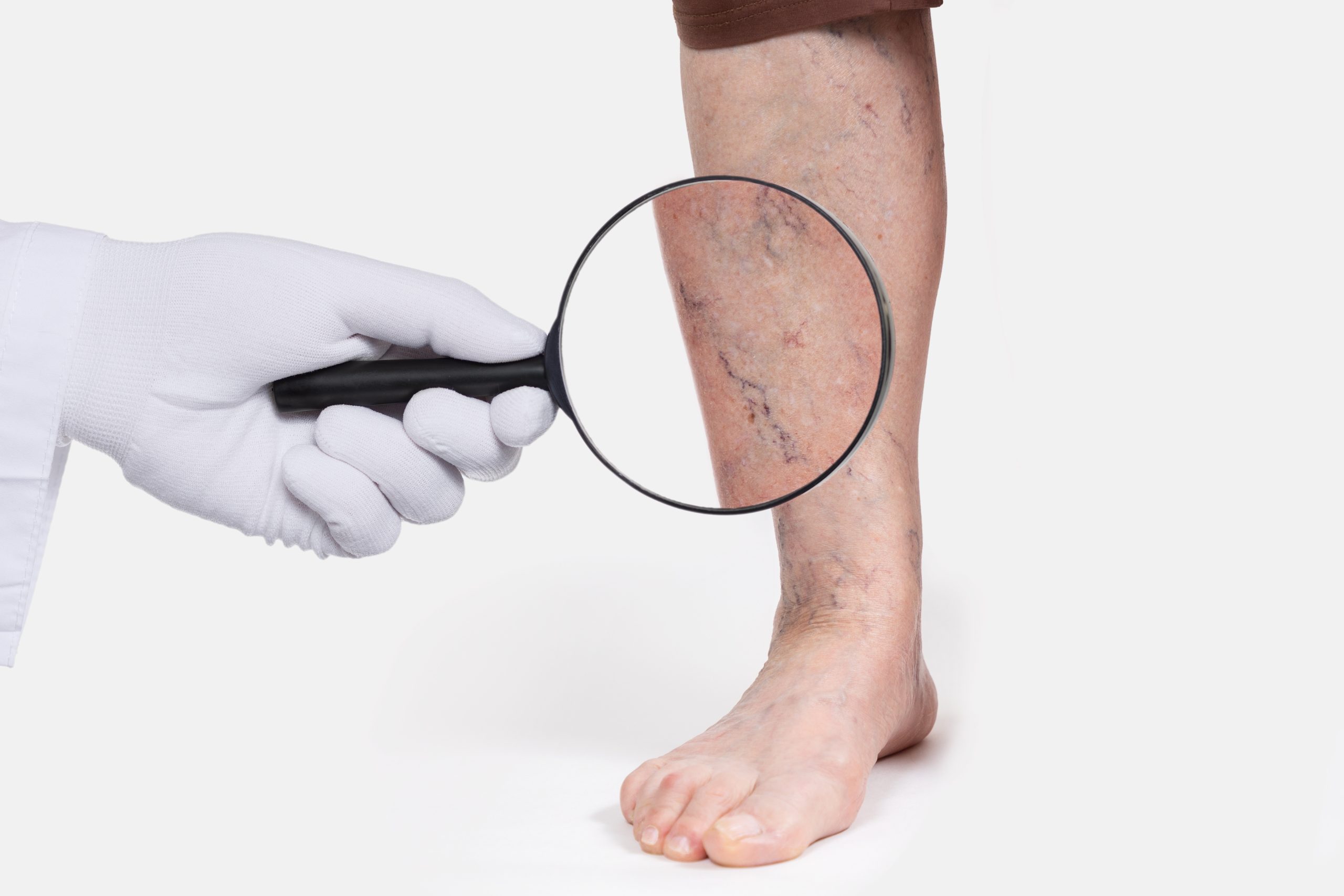
Lasering spider veins is the go-to solution for treatment because it works with surgical accuracy but doesn’t require invasive surgery.
Spider veins are easy to spot — those fine, web-like clusters of red, blue, or purple vessels that show up on the legs and face. They’re rarely a medical concern, but they’re consistently an aesthetic one.
Understanding when to treat matters nearly as much as understanding how.
Why Winter Is the Right Time to Treat
Lasering spider veins effectively means thinking a season or two ahead.
The urge to address spider veins tends to spike in spring, when warmer weather and lighter clothing put them on full display, but that’s actually the worst time to start. Winter offers a distinct clinical advantage, and practitioners who specialize in vascular work will tell you this isn’t just a scheduling preference. It’s a strategy.
Laser therapy works through a process called selective photothermolysis. A specific wavelength of light targets the vessel, where hemoglobin absorbs the energy and converts it to heat. That heat causes the vein wall to collapse, and the body gradually reabsorbs the tissue over the following weeks.
Because the skin absorbs concentrated light energy during treatment, it becomes temporarily photosensitive. Ultraviolet exposure is the primary threat to a clean recovery.
Winter naturally reduces that risk on two fronts. Sun intensity drops, and daily clothing habits shift toward trousers and long sleeves, which passively shield treated areas without any extra effort. A patient who schedules summer treatments faces a different reality, where even a short walk across a parking lot exposes healing skin to enough UV radiation to trigger post-inflammatory hyperpigmentation.
This looks like a stubborn darkening that can persist for months. Choosing winter sidesteps that risk entirely.
There’s also a physiological benefit. Untanned skin creates stronger visual contrast between the target vessel and the surrounding tissue, which lets practitioners work with higher energy settings at a lower risk of surface damage. Beginning a series of three to five treatments in November or December means the final session wraps up just as spring arrives.
Since the body’s biological cleanup phase runs roughly eight to twelve weeks, the timing aligns neatly with the first warm-weather weekend.
“After you receive one of these minimally-invasive treatments, your body needs a little time to recover from treatment and absorb your veins,” according to UVA Health. “If you have your vein treatment during the winter months, your veins will have plenty of time to disappear so that you can reveal your vein-free legs when the weather gets warmer.”
Having your vein treatment in the winter also means that you can wear long pants to hide any potential side effects, it says.
“After vein treatment, you may experience mild bruising, redness, or swelling,” the article adds. “Not only will you be able to more easily hide these side effects in the winter, but you will also be able to mitigate side effects by wearing compression socks.”
Lasering Spider Veins for Facial Veins
Spider veins on the face, particularly around the nose, cheeks and chin, are a different challenge than those on the legs.
These vessels, clinically called telangiectasia, produce a persistent flushed or ruddy appearance that high-quality cosmetics can soften but rarely eliminate. Laser therapy is especially well-suited here because precision is non-negotiable.
Facial skin is thinner and more vascular than skin on the limbs, which means the treatment tool needs to distinguish sharply between the target vessel and the healthy tissue surrounding it. Modern vascular lasers offer adjustable spot sizes as small as one to three millimeters, which gives a skilled practitioner the ability to trace a single spider vein along the side of the nose without disturbing the adjacent skin.
Rather than using generalized heat or needle-based methods, the laser delivers a focused column of energy along a controlled path. Pulse durations are tuned to protect the epidermis while sealing the vessel underneath, which is what keeps downtime minimal.
For patients managing rosacea-related redness, this becomes particularly valuable. Diffuse capillary networks too fine for any needle can still be reached and treated effectively with the right laser system.
What Happens During Facial Recovery
If you’re considering lasering spider veins, think about when the laser contacts a facial vessel. A visible whitening or subtle darkening of the vein often appears immediately, a direct sign of hemoglobin coagulating.
Because facial tissue has a dense blood supply, healing generally moves faster here than on the legs, though the process still requires some attention.
In the 24-48 hours following treatment, mild swelling and redness are common. Beneath the surface, the body dispatches cytokines and growth factors to begin dismantling the destroyed vessel walls. Chilled air or integrated sapphire cooling tips during the procedure help contain heat to the target area, limiting unnecessary inflammation in the surrounding dermis.
One specific healing pattern worth knowing about is sometimes called the cat scratch effect — a faint, thin line or light crusting that appears along the treated vessel for a few days. It’s actually a good sign, indicating the laser sealed the vessel cleanly.
Because the procedure is non-ablative (meaning the skin surface stays intact), scarring risk is negligible when performed by a qualified practitioner. The lymphatic system quietly processes the debris underneath.
Within 7-10 days, those micro-traces disappear, leaving the complexion noticeably clearer and more even.
Understanding the Laser Systems: KTP vs. Nd:YAG
Two laser platforms dominate vascular treatment, and each is optimized for a different job.
The KTP laser emits a green beam calibrated for superficial red vessels. Oxyhemoglobin absorbs this wavelength efficiently, which means the system achieves closure with relatively low energy output. This makes it the preferred tool for fine capillaries on the cheeks and nose.
The Nd:YAG operates in the near-infrared spectrum and behaves differently. Melanin in the skin’s upper layers absorbs very little of it, but deeper blue-toned vessels absorb it strongly. That property allows the energy to pass through the dermis with minimal surface interaction, making it the most effective and safest option for patients with darker skin tones and for the deeper blue veins on the legs that sit two to three millimeters below the surface.
What ties both systems together is pulse-width modulation. Practitioners adjust the pulse duration to match the Thermal Relaxation Time (TRT) of the target vessel — the time it takes for the vessel to lose half its absorbed heat. For a fine facial capillary, a pulse of 5-10 milliseconds is appropriate.
For a larger leg vein, that pulse may extend to forty or fifty milliseconds. Manipulating energy at the millisecond level is what makes it possible to permanently close a vessel while leaving the surrounding skin unharmed.
The Financial Case for Permanent Treatment
The cost comparison between lasering spider veins and ongoing concealment is straightforward. Quality body makeup and facial concealers run fifty to one hundred dollars monthly.
Over 10 years, that’s more than ten thousand dollars spent hiding a problem that a few laser sessions could have resolved for a fraction of that amount. The time cost adds up just as quickly.
Applying and blending camouflage makeup to the legs or face typically adds 10-15 minutes to a morning routine. That can accumulate to more than 60 hours per year spent on a temporary fix. Eliminating the root cause removes that daily friction entirely.
Patient satisfaction data reinforces the value. Surveys consistently show that roughly 95 percent of patients who complete laser vascular treatment report a meaningful increase in confidence — one they describe as outweighing the upfront cost.
Viewed as a long-term investment in skin health rather than a one-time expense, laser therapy fits logically into a serious, well-considered self-care plan.
“Research has shown that laser treatment enhances the appearance and symptoms of varicose and spider veins,” states DC Report. “Studies indicate that this therapy effectively reduces pain, decreases swelling, alleviates leg heaviness, and resolves signs of damaged veins.”
One benefit of laser procedures is that they can be done on an outpatient basis without discomfort or recovery time for patients, the report states. Most individuals can resume their activities after undergoing the procedure.
“However, there might be a bit of bruising or tenderness, which usually goes away within days or weeks,” it states. “While the experience can differ from person to person based on factors like size and location, many patients notice improvement after just one laser treatment session. Sometimes, multiple sessions may be needed to achieve the desired results.”
Laser Modalities and Outcomes
Choosing the right laser comes down to two key variables: how deep the target vessel sits and the patient’s individual skin profile.
The table below outlines the clinical differences between the primary laser systems used in modern vascular treatment, so patients can walk in with a clearer sense of which technology applies to their specific situation.
| KTP Laser (532 nanometer) | Nd:YAG Laser (1064 nanometer) | |
| Primary Target | Superficial Red Vessels | Deeper Blue/Purple Vessels |
| Ideal Area | Face (Nose/Cheeks) | Legs and Ankles |
| Vessel Diameter | Very Fine | Small to Medium (1-3 millimeter) |
| Skin Tone Safety | Best for Fair Skin | Safe for All |
| Typical Sessions | 1-3 Sessions | 3-5 Sessions |
| Immediate Effect | Vessel Blanching/Disappearance | Vessel Darkening/Coagulation |
These distinctions matter because they shape realistic expectations. Superficial red capillaries around the nose respond differently than the deeper blue vessels along the lower legs. Each has a wavelength specifically calibrated to address it with minimal effect on the surrounding tissue.
How to Master Lasering Spider Veins
- Does laser vein removal hurt more on the face or the legs? Generally, the face feels more sensitive due to the higher density of nerve endings. However, because the vessels are smaller and require less energy, the treatment finishes very quickly. Modern systems also utilize integrated cooling to numb the skin as the laser fires, significantly increasing comfort.
- Will the spider veins come back after laser treatment? The specific vessels that the body successfully closes and reabsorbs are gone permanently. However, laser therapy does not change the underlying genetics or lifestyle factors that cause spider veins. New vessels may form over time, which is why many patients opt for a single maintenance session every few years.
- How soon after a laser session can I return to my skincare routine? For facial treatments, avoid aggressive actives like Retinol, Vitamin C, or Glycolic Acid for 3-5 days post-treatment. Focus on hydration and, most importantly, high-SPF mineral sunscreen.
- Can laser therapy treat bulging varicose veins? No. Laser therapy (transcutaneous) treats surface spider veins and small reticular veins. True varicose veins are deeper and larger, requiring different medical interventions such as endovenous ablation.
“The number of treatments needed to clear or improve the condition differs from patient to patient,” states Jefferson Health. “For some, improvement is immediate; however, it typically takes several weeks to see the final results.”
The article says that each vein usually requires one to three treatments. The veins will completely disappear over a period of two weeks to three months. Recurrence may occur over a period of one to five years.
“This treatment does not prevent new spider veins from developing,” it states. “Certain types of large varicose veins may not respond to sclerotherapy alone. These vessels may require a minor surgical procedure, sometimes followed by sclerotherapy. If that is the case for you, we will refer you to one of our vascular surgeons who can evaluate and treat any larger varicose veins.”
Wellness and Pain
Need more information on lasering spider veins? Call Wellness and Pain. We offer conservative treatments, routine visits, and minimally invasive quick-recovery procedures. We can keep you free of problems by providing lifestyle education and home care advice.
This enables you to avoid and manage issues, quickly relieving your inhibiting lifestyle conditions when complications arise. We personalize patient care plans based on each patient’s condition and unique circumstances. Wellness and Pain can help improve wellness, increase mobility, relieve pain, and enhance your mental space and overall health.