
The standard playbook for leg cramps at night is reactive: wait for the cramp, stretch it out, rub the muscle, and drink water. That’s how most people managed it, and most doctors didn’t push back hard on that approach.
Sleep medicine in 2026 has a different agenda. The field has moved upstream, trying to intercept the cramp before the muscle fires. Adhesive sensors read low-level electrical changes in muscle tissue while a person sleeps. Algorithms trained on those signals flag patterns that precede cramping, sometimes by several minutes. The old advice is still out there, but it’s not driving anyone’s research budget anymore.
The bedroom itself has quietly become a place where biometric monitoring happens overnight, not just rest. Wearables have expanded well past step counts and resting heart rate. They’re now watching for the neuromuscular signatures that come right before a cramp, that small contractile tremors and electrolyte flux that build quietly under the surface. When a device detects that sequence, it can wake the sleeper gently or trigger a mild vibration that interrupts the muscle’s path toward full contraction.
The logic is direct: if detection precedes the event, intervention becomes possible. Not perfectly, not every time, but often enough to make reactive management look primitive by comparison.
Why Analog Solutions Failed Against Leg Cramps at Night
For most of the twentieth century, leg cramps carried a simple explanation: dehydration, or a shortfall of sodium, potassium, or magnesium. That story had real staying power.
Then a major 2026 global review examined the evidence and found it thin, at least for idiopathic cramps, the kind with no obvious cause. Researchers have since moved their attention to the spinal cord, specifically to how sensory signals get scrambled when a muscle is fatigued or held in a shortened position for too long.
Here’s what actually happens in the muscle. Golgi tendon organs sit at the junction between muscle fibers and tendons, and their job is to sense excessive tension and signal the spinal cord to back off. When a muscle cramps, those organs go quiet, possibly because the shortened position reduces the mechanical stretch they need to fire.
Meanwhile, the muscle spindles keep sending strong contraction signals. The spinal cord gets one loud message and one silent one, and the muscle just keeps firing. Drinking water or swallowing a magnesium tablet does nothing to that feedback loop while the cramp is actively running.
That’s the practical gap the old advice never closed. High-tech interventions target the nerve signals directly, either by applying electrical stimulation to the tendon area or by triggering sensory input that competes with the contraction signal at the spinal level. They work on the mechanism, not on a downstream variable that may or may not be relevant.
Breaking the Alpha Motor Neuron Feedback Loop
The core mechanism driving leg cramps at night is a feedback loop, and the goal of modern technology is to break it before it completes.
During a nocturnal leg cramp, the alpha motor neuron fires repeatedly, and each contraction sends afferent signals back into the spinal cord that trigger more firing. It escalates fast. By the time the pain actually wakes the sleeper, the discharge rate has often exceeded 20 impulses per second, which is well above what a resting muscle should ever produce.
Predictive systems exploit a window that exists just before that cascade locks in. Researchers identified a pre-spasm pattern they call neural drive leakage, a period when the spinal cord starts generating disordered efferent output before the muscle fully contracts. The spasm hasn’t started yet, but the circuitry is already misfiring.
Current wearable technology detects that aberrant signal pattern and responds with calibrated mechanical vibration delivered directly to the muscle or tendon. That vibration activates the Golgi tendon organs and muscle spindles, which feed competing sensory input back into the spinal cord and interrupt the leakage before full contraction takes hold.
The principle resembles a prescribed burn in wildfire management: rather than waiting for fire to spread across dry terrain, a controlled ignition is introduced earlier, when conditions allow containment. By 2026, this pre-emptive neuromuscular intervention had moved from clinical trials into mainstream sleep technology, and researchers now consider it the most mechanistically sound approach to cramp prevention available.
The Rise of Sensor Arrays Smart Fabrics
The hardware is where everything starts, and the hardware has changed considerably.
Flexible 16-channel sensor arrays have replaced the bulky single-lead EMG setups that researchers used a decade ago. These arrays come embedded in lightweight sleeves or woven directly into fitted sheets, and the fabric itself is breathable enough that most users stop noticing it within a few nights. That’s not a minor comfort detail; it matters because a sensor removed at 2 a.m. collects no data.
“Facing these hardware and software challenges will be central to the next stage of progress in prosthetic development, as it is crucial for enabling reliable, high-dexterity devices suitable for everyday use,” states a report in PubMed Central. “Ultimately, moving from lab setups to wearable systems will support clinical validation in real-world conditions, improve user experience, and reduce prosthesis abandonment.”
Traditional EMG had a persistent signal quality problem. Sweat, body hair, and skin impedance all degraded the readings, especially during sleep when repositioning happened constantly. A 16-channel array solves this differently: each electrode captures a discrete zone of the muscle, and the system triangulates those readings into a three-dimensional activity map.
Fasciculations that most people would never consciously feel show up clearly in that map. A restless sleeper shifting position generates a recognizable movement signature, and the algorithm distinguishes that from the high-frequency twitch pattern that precedes a cramp.
The material science behind this is worth examining closely. Piezoelectric polymer film now gets woven directly into sock fibers and calf sleeves. The film generates a measurable electrical signal in response to mechanical pressure, meaning the fabric itself functions as a distributed sensor. These yarns survive repeated washing without signal degradation, which was a genuine barrier for earlier textile-based sensors.
By distributing electrodes across the full calf and foot, the device builds a spatially resolved picture of muscle recruitment in real time. When a localized high-frequency discharge appears in one zone, the system flags it and identifies the anatomical origin. Older consumer wearables tracked gross movement and heart rate, and they simply lacked the electrode density to catch what’s happening at the motor unit level.
That spatial resolution is what makes early cramp detection possible.
How Machine Learning Predicts Leg Cramps at Night
Identifying the pre-cramp window changed what intervention even means for leg cramps at night.
Recent surface EMG research shows that measurable muscle tension builds for nearly a full minute before the pain crosses the threshold that wakes a sleeper. Sixty seconds is a substantial runway. That window is what makes automated prevention viable rather than just theoretically appealing.
“The future of awake bruxism assessment will incorporate physiological data, possibly electromyography (EMG) of the temporal muscles,” according to a study in Frontiers in Human Neuroscience. “But up to now, temporal muscle contraction patterns in awake bruxism have not been characterized to demonstrate clinical utility. Characterization of awake bruxism physiology is important for future establishment of instrumental assessment protocols and treatment strategies.”
Convolutional neural networks and recurrent neural networks now monitor the incoming data stream from all 16 sensor channels simultaneously, scanning for the rising electrical signature that precedes a full cramp. CNNs handle the spatial pattern recognition across muscle zones, while RNNs track how those patterns evolve across time. When the combined signal crosses a learned threshold, the system triggers its intervention immediately.
It comes in the form of a localized vibration or mild electrical pulse delivered to the tendon or muscle belly. The whole sequence runs in milliseconds. The sleeper stays asleep. The cramp never fully fires.
What makes this clinically interesting is the asymmetry: the intervention has to work before the conscious brain registers anything wrong. If the system waits for pain, it has already failed. The neural networks are essentially making a bet on a probabilistic pattern, committing to action on incomplete information.
This is exactly what a physician does when reading early warning signs in a patient. The difference is that the algorithm does it continuously, every few seconds, all night long.
Real-Time Intervention and Neural Resetting
Those 50 seconds are where the intervention actually lives.
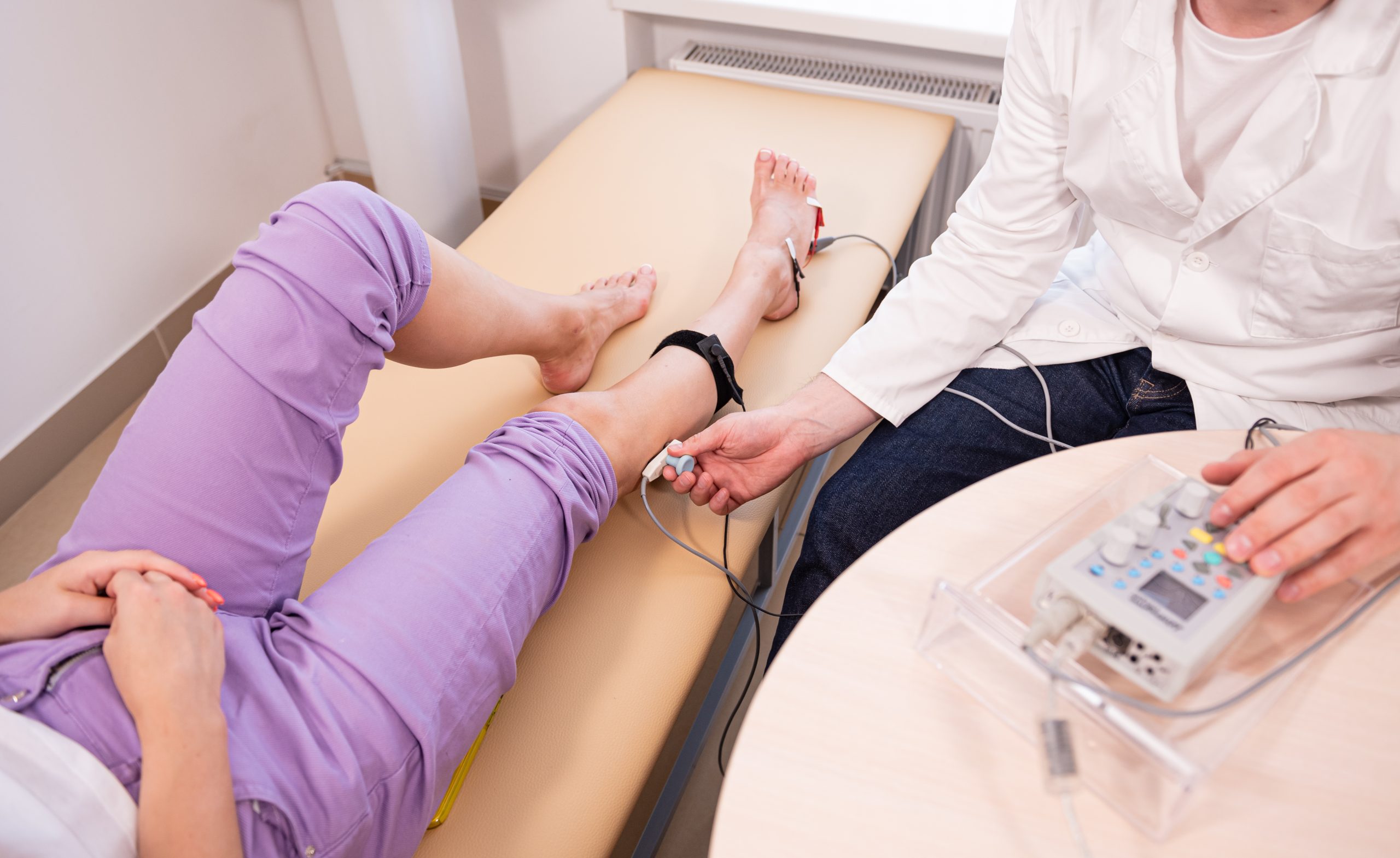
When the CNN/RNN system flags a pre-cramp signature, the device doesn’t wait for confirmation from the sleeper. It fires immediately. The most widely used response is Targeted Vibratory Stimulation, or TVS, which delivers mechanical vibration directly over the muscle belly at frequencies between 60 Hz and 100 Hz.
That frequency range is specific: it falls within the activation threshold for Golgi tendon organs, which sense tensile load at the musculotendinous junction. When the vibration activates those organs, they send inhibitory signals up through the Ib afferent fibers into the spinal cord, and the spinal cord dials back the alpha motor neuron discharge that was building toward a full cramp.
From the sleeper’s perspective, TVS feels like a faint hum against the skin. Most people don’t wake up. The cramp simply doesn’t complete. The neuromuscular loop that would have locked the gastrocnemius or soleus into sustained contraction gets interrupted at the spinal level, before the muscle has a chance to hold that contraction long enough to cause pain. Researchers call this neuromuscular control, which is accurate but undersells what’s actually happening: the device is interceding in a reflex arc that the conscious brain never enters.
Chronic cramp sufferers face a documentation problem that most clinicians recognize but rarely solve well. By the time a patient sits down with a doctor, the specific details of a cramp from several nights prior have blurred considerably. How many cramps that week? How long did each one last? Were symptoms worse after a long walk the day before? That memory gap produces thin clinical data, and thin data produces generic treatment plans.
Ecological Momentary Assessment addresses this directly. EMA uses a smartphone app to capture symptom reports in real time, typically triggered by a wearable notification right after a cramp event or near-miss. The user logs pain intensity, duration, and any contextually relevant factors. It’s like a new medication, unusual physical exertion, or a disrupted sleep schedule.
Over weeks, the combined sensor data and self-report data build a longitudinal profile that shows actual patterns: cramp frequency climbing after statin dose increases, for example, or clustering on days following intense lower-body activity.
Platforms that integrate EMA with continuous EMG monitoring can then adjust intervention thresholds and rehabilitation protocols based on that individual’s actual history. The care plan responds to real behavioral and physiological data rather than population averages. That’s a meaningful shift from how chronic cramp management has traditionally worked.
The Power of the ‘N of 1’ Trial and Data Sovereignty
EMA and continuous EMG data together make a specific kind of clinical study possible: the N-of-1 trial, where the research subject and the patient are the same person.
Traditional randomized trials pool data across hundreds of participants and report what works on average. Averages obscure a lot. An N-of-1 approach lets the AI model treat a patient’s physiological record as its own dataset, looking for causal patterns that only appear in that individual’s body. The system might find that cramp frequency jumps sharply after more than six hours of sedentary behavior, or that nighttime muscle activity increases when bedroom temperature climbs past 22 degrees Celsius.
Neither of those findings would necessarily show up in a population-level study, because other people’s data would dilute the signal.
This is where the clinical value gets concrete. Standard advice like hydrating more, taking magnesium, or stretching before bed fails most patients because it derives from group statistics applied to individuals who don’t match the group profile. The AI, working from a patient’s longitudinal data, can generate a recommendation that’s causally grounded in that person’s own pattern history. If cramp probability reliably rises on evenings following low-mobility days, the system sends a targeted prompt at 8 p.m. to do a three-minute calf stretch.
The recommendation exists because that patient’s data produced it, not because a guidelines committee decided it applied to everyone.
The practical result is a prevention protocol that tightens over time. As the model accumulates more nights of data, its predictions get more granular, and the interventions land closer to when and where they’re actually needed.
Sleep-Onset Anxiety and Quantifying the Burden
Leg cramps at night don’t just hurt. They colonize the bedroom.
People who cramp repeatedly start to dread going to sleep, and that dread is physiologically self-defeating. Pre-sleep anxiety elevates sympathetic nervous system activity, which increases resting muscle tone, which raises cramp probability. The bedroom stops feeling like a recovery space and starts feeling like a place where pain is waiting.
Partners lose sleep too. Daytime functioning deteriorates in ways that look clinically similar to chronic insomnia: cognitive sluggishness, irritability, flattened motivation.
Wearable intervention systems address this psychological dimension through a mechanism that’s direct but easy to underestimate. When a patient knows that a sensor array is actively monitoring muscle activity and will intervene before a cramp fully fires, anticipatory anxiety drops. Lower anxiety reduces resting muscle tone. Lower resting muscle tone reduces cramp frequency. The causal chain runs in one direction: the perceived safety produces a real physiological change, not just a feeling.
For a long time, clinicians measured cramp burden by counting cramp events. That metric misses most of what cramps actually do to a person’s life.
The Muscle Cramp Impact Index, or MCII, uses 14 items to capture the downstream consequences: cognitive fog, mood disruption, daytime fatigue, relationship strain, and functional impairment alongside raw cramp frequency. Research consistently finds that high MCII scores correlate with elevated cortisol levels and measurable deficits in working memory, which means the MCII is tracking something biologically real, not just subjective distress.
Current wearable platforms integrate MCII tracking directly into their dashboards. When a user’s Sleep Score drops over several consecutive nights, the system can adjust its detection sensitivity thresholds or push targeted behavioral prompts — like a specific pre-sleep stretching cue timed to that individual’s historical cramp window.
Frustration and disrupted sleep, previously invisible to any clinician who only saw the patient quarterly, now generate a longitudinal data record that both the user and their doctor can actually read.
“Anxiety and related muscle spasms or twitching often improve on their own with at-home treatments,” states Hinge Health. “But if your anxiety and related muscle twitching or spasms are severe, getting worse, or causing difficulty with daily activities, see a healthcare provider. It’s also a good idea to get care if you have: persistent or worsening spasms or twitches despite managing stress, symptoms accompanied by weakness or numbness, sudden onset without clear triggers, reduced quality of life, and distressing thoughts.”
When Medications Cause the Spasm
Drug-induced cramping has moved up the clinical priority list in 2026, and the pharmacological picture is clearer than it used to be.
Long-acting beta-2 agonists show the strongest association. Patients who start LABA therapy carry more than twice the baseline risk of requiring cramp intervention, likely because beta-2 receptor activation in skeletal muscle shifts intracellular potassium balance and alters the excitability threshold of the motor neuron.
Diuretics, particularly thiazides and potassium-sparing agents prescribed for hypertension, follow as the next most frequently implicated drug class. These medications change the electrochemical gradients that govern neuromuscular transmission, and that disruption lowers the stimulus required to trigger an involuntary contraction.
Wearable EMG platforms now let patients log medication changes directly alongside their biometric data. If a patient starts a new LABA inhaler on a Monday and the system records a 40 percent increase in pre-cramp signatures by Thursday, that correlation appears in the longitudinal dashboard as a visible, timestamped pattern. The patient brings that data record to their physician rather than a vague recollection. The physician adjusts the dose or substitutes an alternative. The guesswork leaves the conversation.
| Analog Approach | Digital Approach | |
| Detection Method | Subjective (Patient wakes up in pain) | Objective (16-channel VMMG sensor arrays) |
| Prediction Window | 0 seconds (Reactionary) | Up to 50 seconds (Pre-spasm identification) |
| Primary Theory | Electrolyte / Dehydration (Systemic) | Altered Neuromuscular Control (Local) |
| Intervention Type | Physical (Stretching, Massage) | Neurological (Targeted Vibratory Stimulation) |
| Data Collection | Recall-based (Patient memory) | Real-time (EMA and continuous logging) |
| Personalization | Population-based (Drink more water) | “N of 1” (Personalized signatures) |
| Cost Efficiency | High long-term cost (Lost sleep, meds) | High initial ROI (Avoids ER visits/comorbidities) |
| Device Comfort | None (Or bulky medical braces) | High (Flexible smart fabrics) |
The broader clinical change in 2026 runs deeper than any single device or drug interaction protocol. Treatment has moved from anatomically diffuse to spatially precise. Earlier approaches treated the whole neuromuscular system, partly because clinicians lacked the tools to localize where a cramp was actually initiating. Current TVS and targeted electrical stimulation systems deliver their intervention to a specific muscle zone, in a specific window, based on a real-time signal from that exact location.
The cramp that used to jolt a sleeper fully awake, spike cortisol, and fragment the remainder of the night now gets intercepted at the spinal reflex level before the contraction fully loads. What registered as a physiological emergency becomes, from the body’s perspective, a brief and unremarkable reset. That’s a functionally different experience of the same underlying biology.
Questions and Answers in Today’s the Landscape
A few questions come up consistently when people first encounter EMG-based cramp prevention technology.
- How do 16-channel sensors differ from standard smartwatches or fitness trackers? Standard consumer wearables typically use accelerometers to track motion or PPG sensors to track heart rate. These represent macro metrics. In contrast, 16-channel pressure sensor arrays use special technology to listen to the internal mechanical oscillations of muscle fibers.
- Is the 50-second prediction window consistent for everyone? While 50 seconds represents the upper limit identified in academic pilot studies, the pre-cramp window varies based on the individual’s cramp-prone state. However, machine learning algorithms adapt to these variations. Through “N of 1” trials, the AI learns each patient’s specific baseline tension and triggers interventions.
- Are these smart fabrics safe for daily laundering? Yes. Manufacturers design the 2026 generation of conductive yarns and piezoelectric PVDF sensors to withstand between 100 and 200 industrial wash cycles. The electronics typically reside within the polymer matrix of the fabric, ensuring that the sensitivity of the 16-channel array remains intact.
- Is my data private in an “N of 1” trial? The 2026 regulatory landscape for Digital Therapeutics (DTx) mandates strict data sovereignty protocols. Most high-end wearables process the 16-channel data on-device rather than in the cloud. This means raw muscle signatures never leave the device.
Cost remains a real barrier for some users, and that’s worth stating plainly. Most clinical-grade wearable EMG systems currently sit above the price point of general consumer sleep trackers. Insurance coverage varies considerably depending on diagnosis and geography.
Ease of use has improved substantially, but the companion apps still require some initial setup to connect medication logs, sleep data, and EMA entries into a unified dashboard.
Wellness and Pain
Need more information on leg cramps at night? Call Wellness and Pain. We offer conservative treatments, routine visits, and minimally invasive quick-recovery procedures. We can keep you free of problems by providing lifestyle education and home care advice.
This enables you to avoid and manage issues, quickly relieving your inhibiting lifestyle conditions when complications arise. We personalize patient care plans based on each patient’s condition and unique circumstances. Wellness and Pain can help improve wellness, increase mobility, relieve pain, and enhance your mental space and overall health.